CommonTechnologies
VPN
They allow us to connect to a private (internal) network and access its hosts and resources as if we were directly connected to it. It is a secure communications channel over shared public networks to connect to a private network (i.e., an employee remotely connecting to their company's corporate network from their home). VPNs provide a degree of privacy and security by encrypting communications over the channel to prevent eavesdropping and access to data traversing the channel.
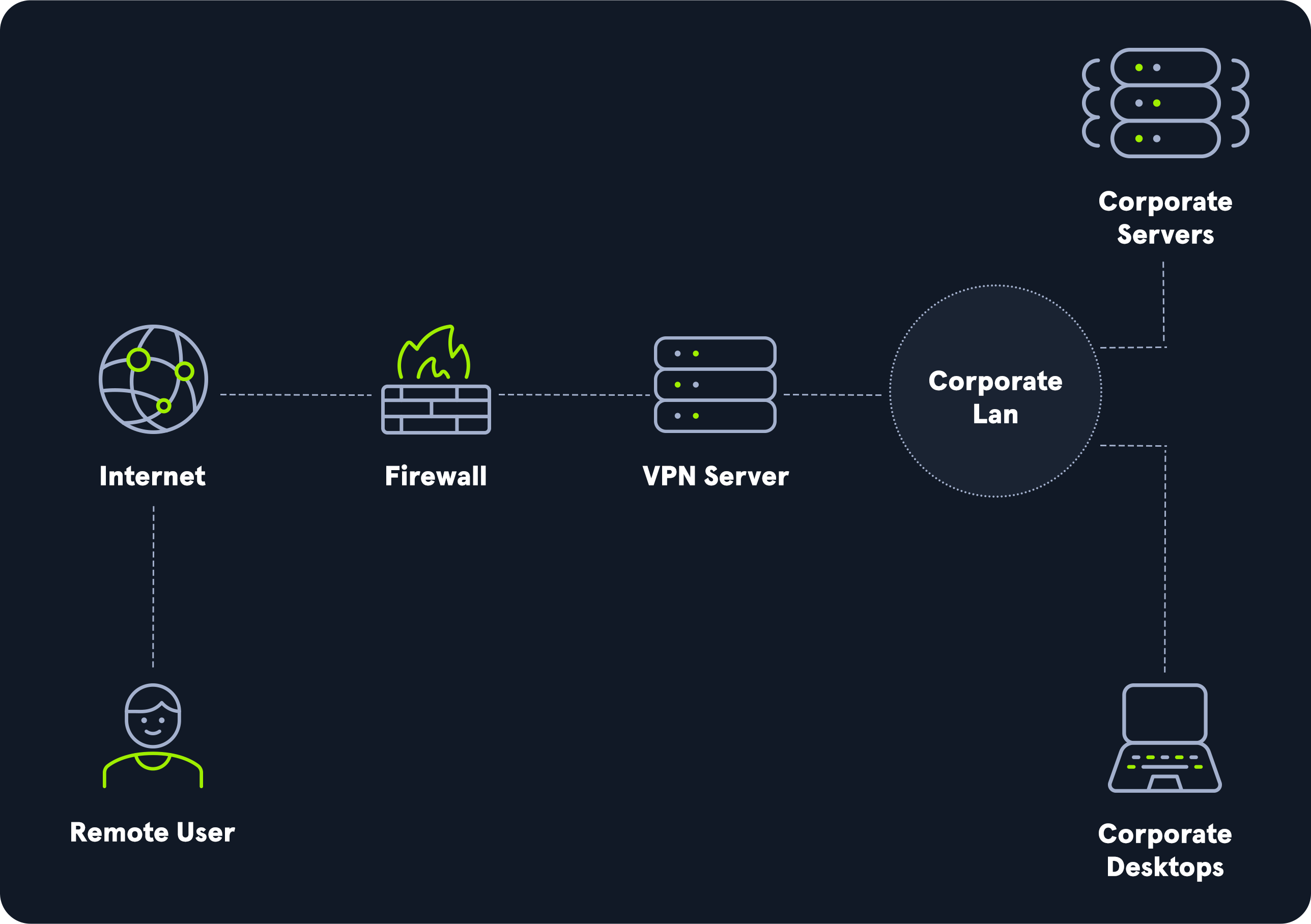
- VPN works by routing our connecting device's internet connection through the target VPN's private server instead of our internet service provider (ISP).
- Data originates from the VPN server rather than our computer and will appear to originate from a public IP address other than our own.
2 types of VPN:
-
Client-based: requires the use of client software to establish the VPN connection.
-
SSL VPN - uses the web browser as the VPN client.
Using a VPN service comes with the risk that the provider is not doing what they are saying and is logging all data.
Shell:
A Shell is an interface that takes our input and passes it to the OS to perform certain tasks.
| Shell Type | What is does: |
|---|---|
Reverse shell | Initiates a connection back to a "listener" on our attack box. |
Bind shell | "Binds" to a specific port on the target host and waits for a connection from our attack box. |
Web shell | Runs operating system commands via the web browser, typically not interactive or semi-interactive. It can also be used to run single commands (i.e., leveraging a file upload vulnerability and uploading a PHP script to run a single command. |
Ports
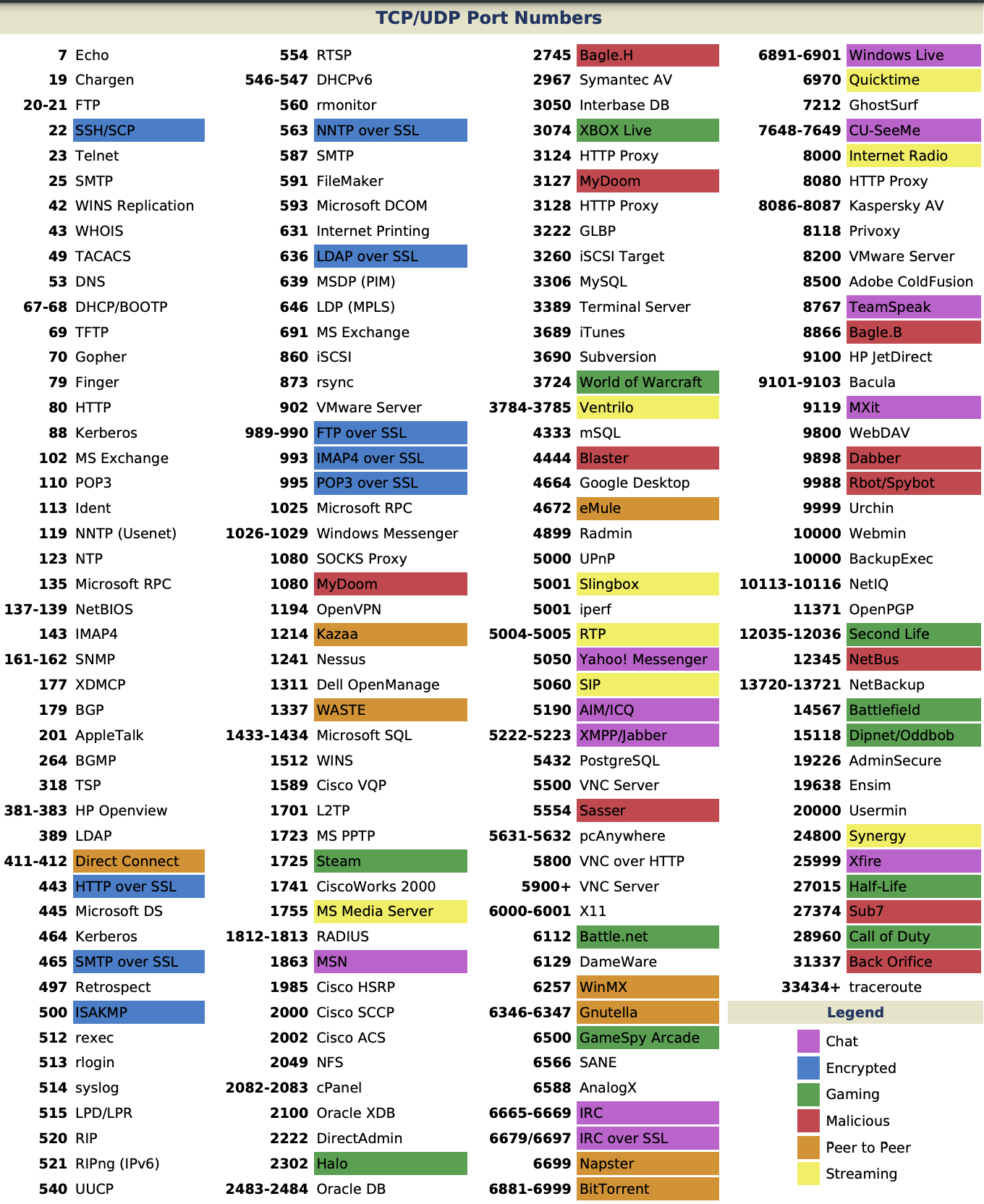
Ports are virtual points where network connections begin and end.
Port numbers allow us to access specific services or applications running on target devices.
Web Server
A web server is an application that runs on the back-end server. Usually handles HTTP traffic, running on port 80 / 443.
HTB Basic tools:
HTB proposes SSH, Netcat, Tmux, Vim during the pen-test process.
- SSH uses a client-server model.
- An SSH connection is more stable than a reverse shell.
- Netcat is a network utility for interacting with TCP/UDP ports.
- Can connect to shells
- Can be used to transfer file
- Socat is Netcat on steroids:
- Fort forwarding
- connection of serial devices
- Tmux : Terminal multiplexers
- Vim- Text Editor